
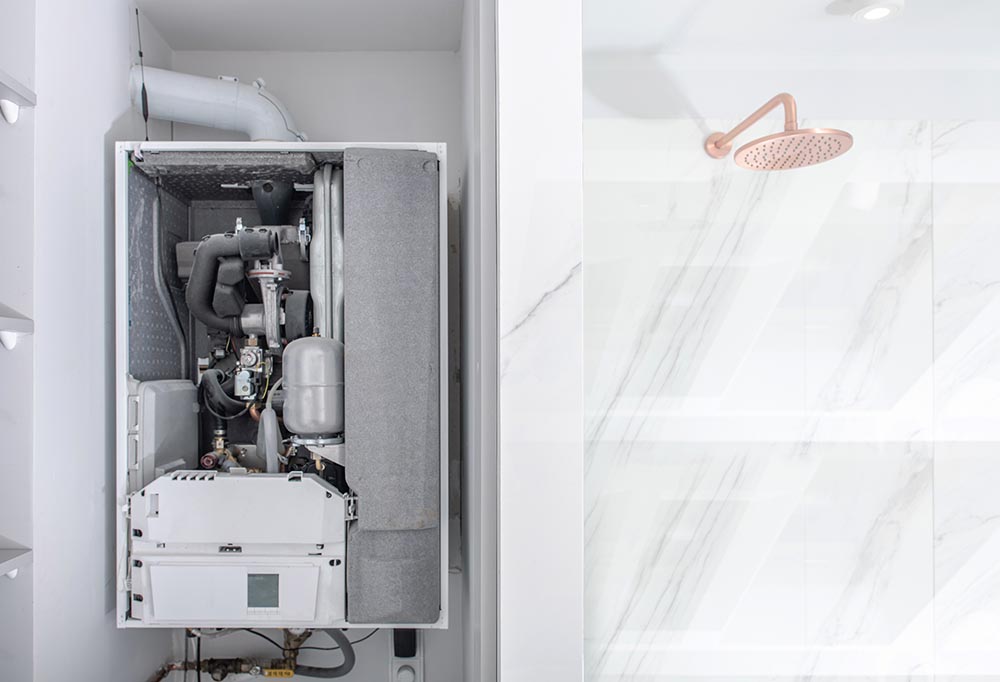

Tankless vs. Traditional Water Heaters: Which One Is Right for You?
When it’s time to replace your water heater, one of the biggest decisions you’ll face is whether to install another traditional tank-style unit or switch to a tankless water heater.
Both systems can reliably provide hot water, but they work very differently.
Traditional water heaters store a large supply of heated water that’s ready when you need it. Tankless systems heat water on demand as it flows through the unit.
So, which is better?
There isn’t one answer that’s right for every Wichita homeowner. Your household size, hot water usage, budget, available utilities, and long-term plans can all influence which system makes the most sense.
Let’s compare the two.
How Does a Traditional Water Heater Work?
A traditional water heater uses a large insulated storage tank, commonly holding several dozen gallons of water.
The system heats the water inside the tank and maintains its temperature until someone turns on a hot water fixture.
Advantages of Traditional Water Heaters
Traditional systems remain popular for several reasons:
- Lower initial installation cost in many situations
- Familiar and proven technology
- Straightforward replacement
- Wide range of sizes available
- Can handle significant household demand when properly sized
- Repairs are generally familiar to plumbing professionals
For homeowners replacing an existing tank-style system, installing a similar unit may also require fewer modifications to the home’s plumbing or utility connections.
What Are the Disadvantages of a Traditional Water Heater?
The biggest limitation is that the tank contains a finite amount of hot water.
If several family members take showers back-to-back while the dishwasher or washing machine is running, the tank can eventually run out of heated water.
You’ll then have to wait for the system to heat another tank.
Traditional water heaters can also experience standby heat loss because they maintain the stored water at a set temperature even when nobody is using it.
And because the tank stores a large amount of water, a major tank failure can potentially release significant water into the surrounding area.
How Does a Tankless Water Heater Work?
A tankless water heater doesn’t maintain a large reservoir of heated water.
Instead, the system activates when someone opens a hot water faucet. Water passes through the unit and is heated as it’s needed.
When the faucet turns off, the system stops heating.
This on-demand design provides some significant advantages.
Advantages of Tankless Water Heaters
Hot Water Without a Storage Tank
Because water is heated as it’s needed, you’re not limited by the number of gallons stored in a tank.
A properly sized tankless system can provide a continuous supply of hot water.
That can be especially attractive for larger households or families that frequently use hot water.
Improved Energy Efficiency
Traditional water heaters continually maintain the temperature of stored water.
Tankless units eliminate much of this standby energy use because they only heat water when there’s demand.
Actual energy savings depend on household usage, equipment, fuel source, and installation.
Longer Potential Lifespan
Tankless water heaters can often remain in service longer than conventional tank-style units when they’re properly installed and maintained.
That longer service life can help offset some of the higher upfront investment.
More Space
Without a large storage tank, tankless units require considerably less room.
Many are mounted directly to a wall, freeing up valuable floor space in utility rooms, basements, or garages.
What Are the Disadvantages of Tankless Water Heaters?
Tankless isn’t automatically better for every home.
There are several factors homeowners should consider.
Higher Upfront Investment
Tankless water heater installation typically costs more upfront than simply replacing a conventional tank-style system.
Depending on the home, installation may require changes to:
- Gas lines
- Electrical systems
- Venting
- Water lines
- Equipment location
The exact requirements depend on the system and existing home infrastructure.
Proper Sizing Is Extremely Important
Tankless systems must be sized according to the home’s expected hot water demand.
A unit that’s too small may struggle when multiple fixtures require hot water simultaneously.
For example, running two showers while also operating a dishwasher could exceed the capacity of an undersized system.
Professional sizing is therefore an important part of tankless water heater installation.
Maintenance Still Matters
Tankless water heaters aren’t maintenance-free.
Mineral buildup can accumulate inside the heat exchanger, especially in areas with harder water.
Periodic maintenance can help maintain efficiency and extend equipment life.
Tank vs. Tankless Water Heater: Quick Comparison
Traditional Tank Water Heater
Best for: Homeowners looking for a familiar system with a generally lower initial investment.
Advantages:
- Lower upfront cost in many installations
- Straightforward replacement
- Simple operation
- Wide availability
Potential Drawbacks:
- Limited stored hot water
- Standby energy loss
- Takes up more space
- Tank deterioration can eventually lead to leaks
Tankless Water Heater
Best for: Homeowners prioritizing efficiency, space savings, continuous hot water, and potentially longer equipment life.
Advantages:
- On-demand hot water
- No large storage tank
- Reduced standby energy loss
- Compact installation
- Longer potential lifespan
Potential Drawbacks:
- Higher initial investment
- Installation modifications may be required
- Proper sizing is critical
- Routine maintenance remains important
Which Water Heater Is More Energy Efficient?
Tankless systems generally have an efficiency advantage because they don’t continuously maintain a tank of hot water.
However, that doesn’t automatically mean switching to tankless will produce dramatic savings for every household.
Your actual operating costs depend on factors including:
- Household size
- Hot water usage
- Fuel source
- Equipment efficiency
- Local utility costs
- System maintenance
If energy efficiency is one of your primary goals, compare the specific equipment options rather than choosing based solely on whether a system has a tank.
Which Water Heater Is Better for a Large Family?
This depends heavily on how your household uses hot water.
A traditional water heater with a sufficiently large tank can handle substantial demand. The disadvantage is that once the stored hot water is depleted, everyone has to wait for more water to heat.
A properly sized tankless water heater can provide hot water continuously.
However, tankless systems still have flow-rate limitations.
If several showers, sinks, and appliances require hot water simultaneously, the unit must have enough capacity to meet that combined demand.
This is why professional sizing matters.
Is a Tankless Water Heater Worth the Investment?
For many homeowners, it can be.
Tankless water heaters may be particularly attractive if you:
- Plan to stay in your home for many years
- Want continuous hot water
- Have limited space
- Want to improve energy efficiency
- Are already planning significant plumbing upgrades
- Want equipment with a potentially longer service life
On the other hand, homeowners looking for the lowest upfront replacement cost may find that a traditional water heater remains the better choice.
The important thing is choosing a system based on your home’s needs rather than assuming one technology is always superior.
Should You Switch to Tankless When Your Current Water Heater Fails?
Water heater replacement is often the perfect time to consider your options.
If your existing tank water heater is nearing the end of its useful life, ask a plumbing professional to evaluate whether your home is a good candidate for tankless installation.
Factors to consider include:
- Number of people in the household
- Number of bathrooms
- Typical simultaneous hot water usage
- Existing gas or electrical service
- Installation location
- Venting requirements
- Budget
- Long-term ownership plans
A professional evaluation can help determine whether the long-term benefits justify the additional upfront investment.
Don’t Wait Until Your Water Heater Completely Fails
If your current water heater is aging, leaking, producing inconsistent temperatures, making unusual noises, or struggling to provide enough hot water, it may be time to start planning for replacement.
Planning before complete failure gives you time to compare options instead of making a rushed decision because your family suddenly has no hot water.
Whether you choose tankless or traditional, selecting the right size and having the equipment professionally installed are critical to reliable performance.
Tankless and Traditional Water Heater Installation in Wichita
If you’re considering a new water heater in Wichita, B&C Services can help you determine which option makes the most sense for your home.
Our experienced plumbing professionals can evaluate your household’s hot water needs, inspect your existing system, discuss traditional and tankless options, and recommend a solution based on your home and budget.
Whether you need water heater repair, traditional water heater replacement, or tankless water heater installation, B&C Services is ready to help.
Contact B&C Services today to discuss your water heater options and find the right system for your Wichita home.


0 Comments